Exposition générale
- Exhibition, Paris
- Sat 25 Oct 2025 → Sun 23 Aug 2026
Infos
La Fondation est ouverte du mardi au dimanche, de 11h à 20h, et jusqu’à 22h le mardi.
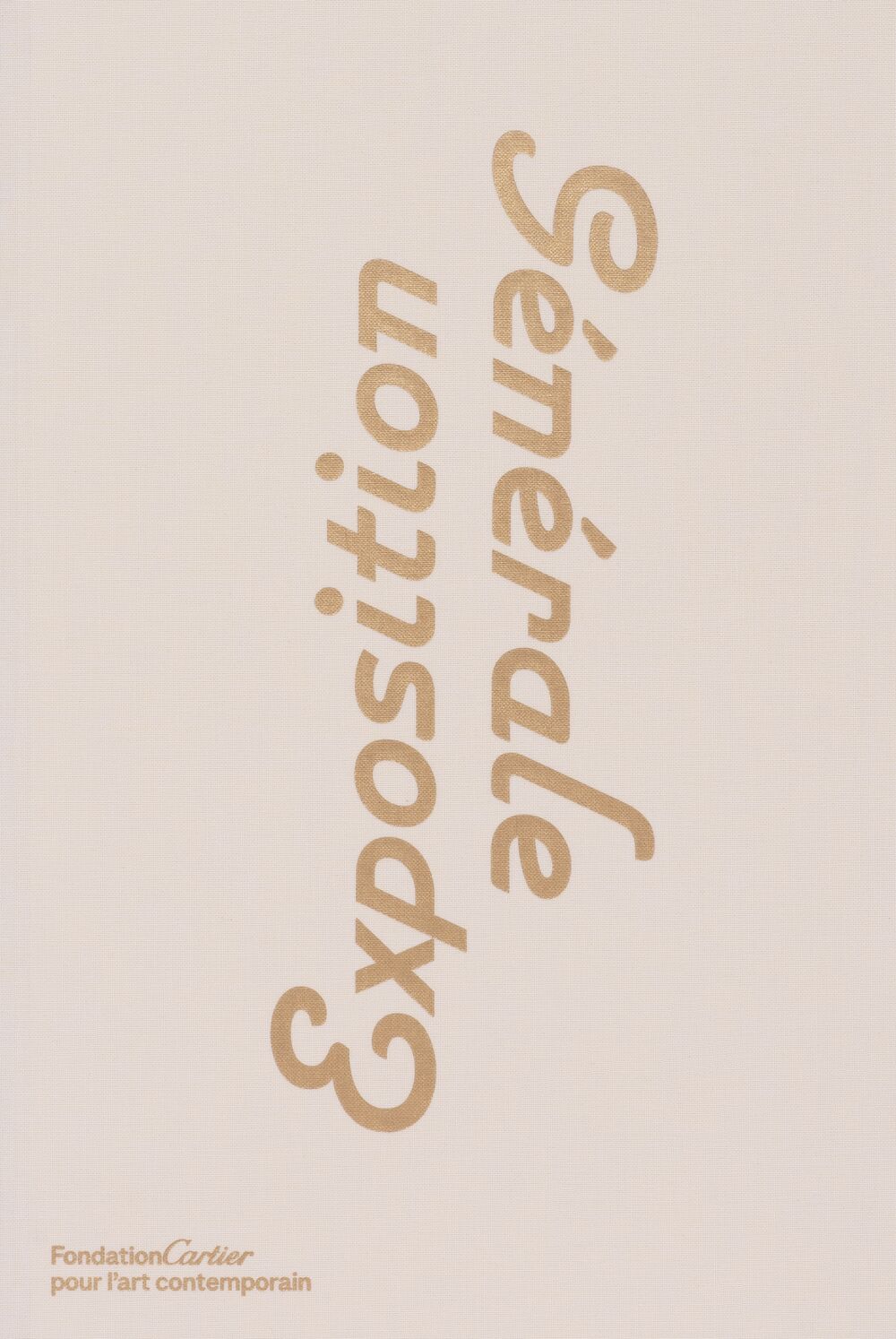
With its collection brought together over the course of the Fondation's exhibitions, Exposition Générale looks back at forty years of contemporary art at the Fondation Cartier. In reactivating its building's social, cultural, and architectural heritage and its openness to the town, it draws an alternative map of contemporary art, initiating an innovative approach to exhibitions, thanks to its new architectural layout designed by Jean Nouvel.
-

© Alessandro Mendini, Petite Cathédrale, 2002 © Bodys Isek Kingelez, Projet pour le Kinshasa du troisième millénaire (détail), 1997 © Alessandro Mendini, OMG !, 2014 © Peter Halley, Code Warrior, 1997 © Junya.Ishigami+associates, Chapel of Valley, 2018. Photo © Marc Domage -

Panamarenko, Panama, Spitzbergen, Nova Zemblaya, 1996, Acier, verre acrylique, peinture, moteur, tubes fluorescents, caméra, moniteur, matériaux divers, 600 x 705 x 344 cm © Panamarenko / Adagp, Paris, 2025 Photo © Marc Domage
A new map of contemporary creation
The Fondation Cartier's collection, a reflection of the institution's history, programme, and openness to the world in all its diversity, charts forty years of international contemporary creation. With emblematic works and elements chosen from exhibitions that have infused its programme since its creation in 1984, the Exposition Générale presents the guiding principles of this unique heritage. It reveals the lively character of a collection which, throughout the Fondation's history, has been brought together thanks to the exhibitions held there.

Organised around four main elements that are present throughout the Collection, the Exposition Générale presents the diversity of the institution's artistic commitments. It starts with an architectural laboratory (Machines d’Architecture) where models, drawings, fragments, and installations, in dialogue with the urban environment, demonstrate a variety of approaches to and critical adaptations of architecture. Composing a reinvented town, these shapes mingle with living worlds that invite the onlooker to query the role of the institution in conserving endangered ecosystems and the limits of anthropocentrism (Être Nature). The exhibition also explores creation as a space for experimentation and breaking down barriers, showing how new interactions between art, crafts, and design rejuvenate plastic art forms (Making Things). Finally, it is also a stage for artistic expression, combining technology, fiction, and scientific knowledge, which establishes other ways of interpreting and experiencing the world (Un Monde Réel). In addition to these themed exhibitions, adjacent presentations reveal the individual or collaborative paths and approaches of some of the key artists in the collection.
The Exposition Générale weaves human and non-human forms and cultures, as well as techniques and artistic forms of expression that are liberated from the traditional hierarchy of fine arts. In doing so, it draws a new map of contemporary creation that breaks away from conventional museum compendiums, bringing new life and purpose to the institution's function as a public space for experimentation and the production of new knowledge.
-

© Olga de Amaral, Muro en rojos, Laine et crin de cheval, 700 x 830, 1982. Photo © Cyril Marcilhacy -

© Luiz Zerbini, Natureza Espiritual da Realidade (détail), 2012 © Junya Ishigami, Sydney Cloud Arch, 2018 © Junya. Ishigami+Associates © Santídio Pereira, Sans titre, 2021. Photo © Cyril Marcilhacy -

Vue d'Exposition Générale, Sarah Sze, Tracing Fallen Sky, 2020 © Sarah Sze. Photo © Marc Domage -

© Jivya Soma Mashe, Fishnet, 2009. Photo © Cyril Marcilhacy
Reengaging with the building's modernity
Exposition Générale takes its name from the exhibitions organised by the Grands Magasins du Louvre as of the end of the 19th century in the Haussmannian building that the Fondation Cartier occupies today, which was built for the first Exposition Universelle in Paris in 1855. Throughout its entire history, this building has continually been reinvented as an exhibition site, revealing strong continuity between its successive transformations and the spatial installation arrangements that have accompanied them. Its evolution clearly and faithfully demonstrates the history of the development of modern uses of architecture. It was first designed as the Grand Hôtel (c. 1855-1880) to house visitors to the Exposition Universelle, and was gradually transformed into the Grands Magasins (1880-1977), in which its large reception areas became retail exhibit zones, veritable "retail palaces" that people would visit "as if they were going to a museum. This vocation was prolonged with the Louvre des Antiquaires (1977-2018), whose spatial organisation, comprising a series of boutiques linked by lengthy corridors, included a long line of display windows behind which artwork and decorative arts were regularly exhibited. Bringing together objects and merchandise from a wide range of places, these events contributed to the expansion of the cultural sphere, the circulation of new skills, the democratisation of material culture and 19th-century artefacts – a story that echoes the collection's philosophy today.
The spatial installation of Exposition Générale, designed by Formafantasma studio, renders visible the exhibition mechanisms and updates the social and experimental dimension of the "Expositions Générales" and other events that have accompanied the evolution of museum practices. Formafantasma designs a three-dimensional device that interacts with the building's dynamic architecture, exploiting its different vistas and heights. The textile supports – modular fabric structures mounted on aluminium sections and containing their own lighting system – guide the visitor among the works and the exhibition's signage.
-

© Andrei Ujică, Unknown Quantity, 2003-2005. Photo © Marc Domage -

© Gran Chaco, 1952-1996 © Nikau Hindin, Aumoana - Manu Nui, 2024. Photo © Marc Domage
Exposition Générale's extension into the town embraces, above and beyond its building, the architectural heritage of its new urban environment: the Place du Palais-Royal and the Galerie Valois, an underground passageway that used to link the Metro to major department stores, are home to artistic contributions that prolong the exhibition's key elements out into the town. From October 2025 to February 2026, a series of drawings by Andrea Branzi that illustrate her 2008 project for Grand Paris, developed together with Italian architect Stefano Boeri, is presented in the Galerie Valois. By enhancing its porosity with the town and public areas, the Fondation Cartier reasserts its attachment to Paris, making the exhibition site a place in tune with its time, where narratives, knowledge, and forms can collectively be produced.
Exposition Générale
-

The Collection of the Fondation
The Fondation Cartier's Collection was born with the institution's creation, and today it comprises over 4 500 works and 500 artists of 60 different nationalities.
Discover
Events
-

- Paris
- 25 Oct 2025 → 23 Aug 2026, every Saturday, 16:00
- Fondation Cartier pour l’art contemporain
-

- Paris
Ali Kazma in conversation with Marta Ponsa and Dork Zabunyan
« Conversation Générale »
- Tue 05 May 2026, 19:00
- Fondation Cartier pour l’art contemporain
-

- Paris
The Collective Power of Craft
Homo Faber Conversations
- Wed 29 Apr 2026, 19:00
- Studio Marie-Claude Beaud
Change language
- English
- Français
- Arabic أهلًا بك في مؤسّسة Fondation Cartier pour l’art contemporain
- Deutsch Willkommen bei der Fondation Cartier pour l’art contemporain
- Español Bienvenida a la Fondation Cartier pour l’art contemporain
- Italiano Ti diamo il benvenuto alla Fondation Cartier pour l’art contemporain
- Japanese Fondation Cartier pour l’art contemporain へようこそ
- Chinese 欢迎来到Fondation Cartier pour l’art contemporain
- Korean Fondation Cartier pour l’art contemporain에 오신 것을 환영합니다