A Lived Rhetoric
A text by Nicolas Bourriaud on Raymond Hains
Born 1926, Saint-Brieuc (France)
Died 2005, Paris (France)
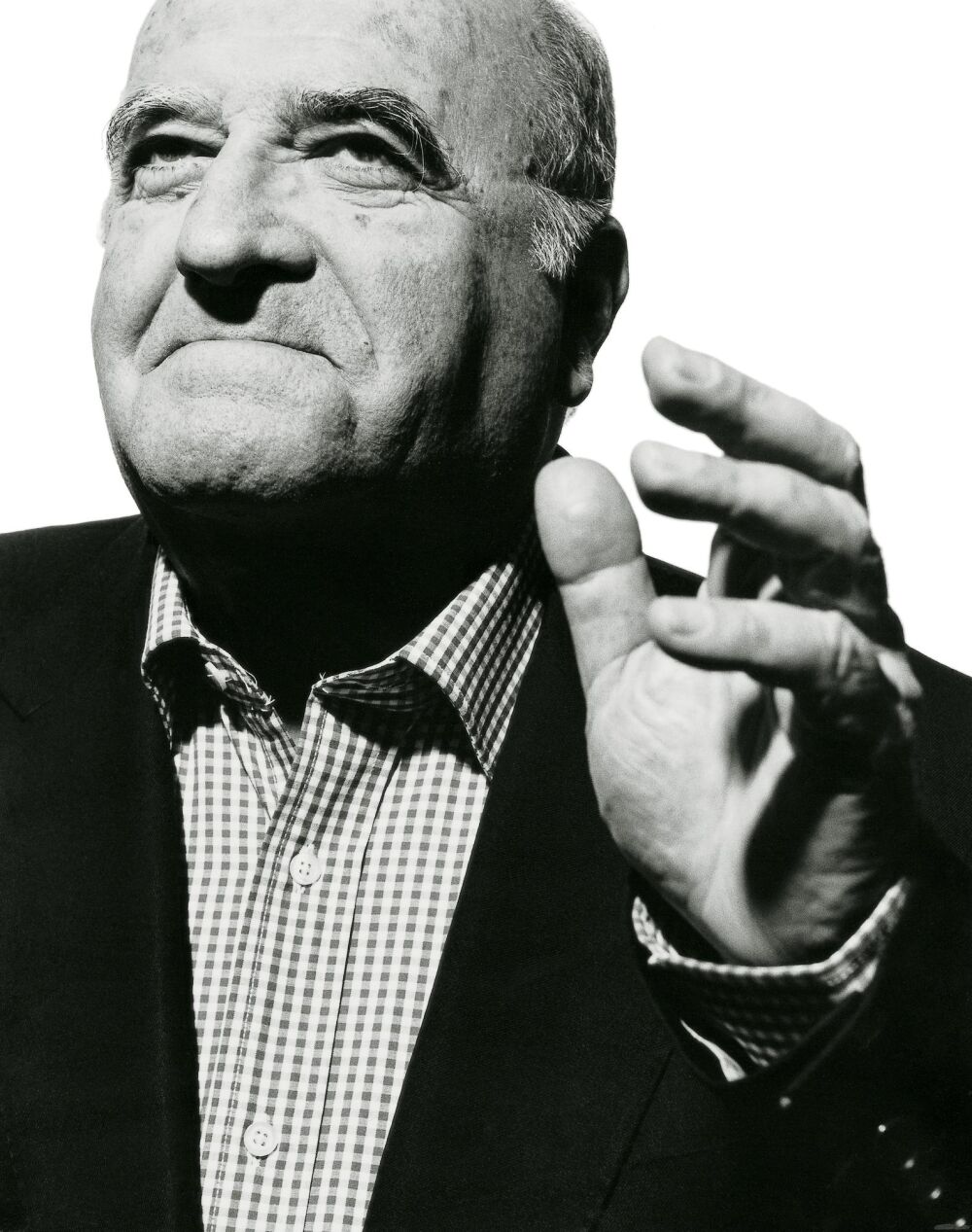
Raymond Hains was a founding member of the Nouveau Réalisme movement, Hains developed a singular body of work, made up of a joyous mix of word play, photographs, idea associations, puns and found objects.
In 1945, he enrolled in the École des Beaux-Arts in Rennes, where he met Jacques Villeglé. Together, they began working with torn posters they found in the street, thus capturing “fragments stolen from reality”. That same year, fascinated by the work of Emmanuel Sougez, Director of Photography at the magazine France-Illustration, Hains managed to obtain work in the photo lab of the magazine where he began experimenting with the deformation of the figurative subjects in his shots. He invented the “’hypnagogoscope”, which made use of used bits of fluted glass as deformed prisms that created an original script from the distorted typographies. In the late 1950s, the artist began a deep dive into the world of wordplay, using self-evident truths and puns. He discovered the Bompaire warehouse which stocked used fences and billboards in galvanised sheet metal which he used to create large-format works. This penchant for street aesthetics and serendipity turns up in his “sidewalk sculpture” photographs in the late 1990s. Digital tools enabled him to refine his associations of images and ideas. In 1997, he developed his “Macintoshages”, on-screen compositions made from a variety of open computer windows.
In 1986, Hains was invited to show his work at the Jouy-en-Josas location of the Fondation Cartier. The spot is close to the Bièvre river, which inspired him to create Hommage au Marquis de Bièvre, the putative inventor of the word “kalembour” (pun) in Diderot's Encyclopédie. In 1995, Hains presented an exhibition entitled Les 3 Cartier. Du Grand Louvre aux 3 Cartier designed especially for the spaces at the Fondation Cartier, Boulevard Raspail, where he developed a large-scale project. His work interwove historical events, personal memories, literary references and artistic reflections through the use of installations and photographs. One iconic series was dedicated to the worksite of the Grand Louvre, which was in full swing at the time.

Les 3 Cartier, du Grand Louvre aux 3 Cartier

Hommage au marquis de Bièvre

A text by Nicolas Bourriaud on Raymond Hains


Les 3 Cartier. Du Grand Louvre aux 3 Cartier