Junya Ishigami
Freeing Architecture
Born 1974, Kanagawa (Japan)
Currently lives and works in Tokyo, Japan.

Junya Ishigami is renowned for his unique and poetic approach to architecture. He attended the Tokyo University of the Arts, and began his career at SANAA before founding his own practice, junya.ishigami+associates, in 2004.
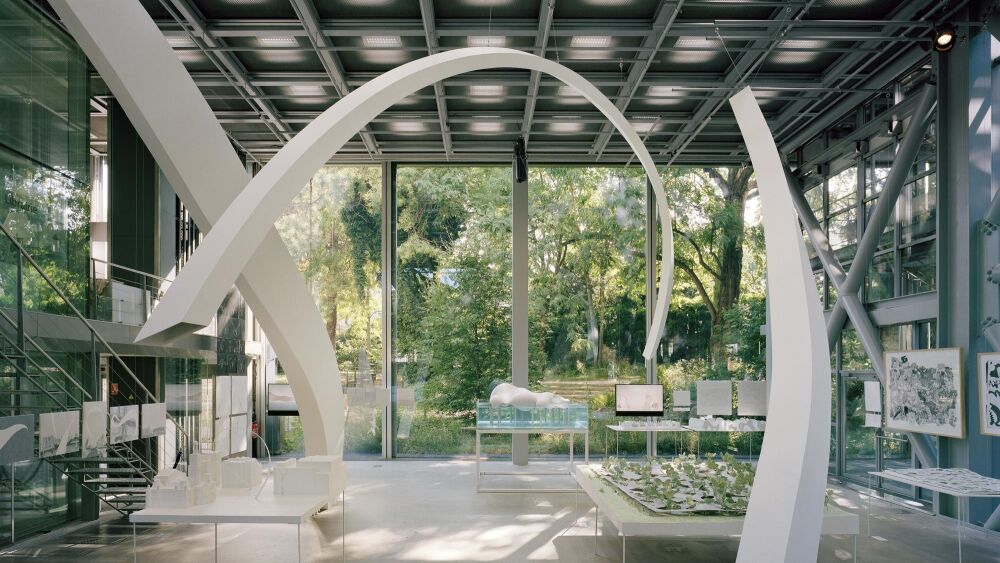
In 2018, the Fondation Cartier invited Ishigami to present a solo exhibition entitled Freeing Architecture. It featured twenty of his architectural projects in Asia and Europe through a series of large-scale maquettes accompanied by films and drawings documenting their various stages of design and construction. It was the first major solo exhibition at the foundation by an architect, and was a watershed event in the recognition of architecture as a form of contemporary art. The exhibition also travelled to the Power Station of Art in Shanghai in 2019.
His oeuvre, which transcends the traditional constraints of architecture, was quickly recognised for its singular originality and he has received numerous awards. In 2010, he won the Golden Lion at the Venice Architecture Biennale, and, in 2019, the Serpentine Gallery commissioned him to design their summer pavilion. His architectural projects, which he enthusiastically compares to landscapes or forests, include such works as the Kanagawa Institute of Technology (2008), the restoration of the museum garden of the Moscow Polytechnic Museum (2011), the design of the House of Peace in Copenhagen (2014), a building in the form of a cloud to symbolise peace, as well as the creation of the Chapel of the Valley, in Bailuwan, in the Chinese province of Shandong (2016), an edifice forty-five metres high that appears to spring out of a fissure in the rock that holds it.


Freeing Architecture

Freeing Architecture